Writing a genuinely great movie review is a craft, not a reaction. Anyone can publish an opinion, but a review that earns trust and readership is built on structure, evidence, and a clear understanding of the audience. Whether you are publishing on a personal blog, a media outlet, or a review aggregation platform, the fundamentals remain the same. This guide breaks down the process into practical, repeatable steps that will elevate your reviews from casual impressions to professional criticism.
Understand the Purpose of a Review
Before you write a single word, clarify what your review is meant to accomplish. A review is not a plot summary, nor is it a platform for personal taste alone. Its core function is to help a reader decide whether a film is worth their time, while also offering insight that deepens their understanding of the work.
A strong review balances three elements:
- Informed opinion: A clear, defensible judgment grounded in the film’s execution.
- Context: How the film fits within its genre, the director’s body of work, and the cultural moment.
- Service to the reader: Enough information to make an informed decision without spoiling the experience.
Watch the Film Properly
You cannot review what you have not truly watched. Take notes during or immediately after the screening. Pay attention to elements that casual viewers overlook: pacing, editing rhythm, sound design, color grading, and performance choices. A second viewing, when possible, reveals structural details and foreshadowing that a first pass misses.
Resist the urge to form a verdict mid-film. Let the work complete before you judge it. First impressions are useful data, but they are not the review itself.
Structure Your Review for Readability
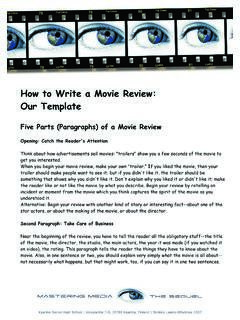
Readers scan before they commit. A predictable structure keeps them engaged and signals professionalism. The following framework works across formats and lengths.
| Hook | Grab attention with a striking observation or question | 1–3 sentences |
| Context | Introduce the film, director, cast, and genre | 1 short paragraph |
| Spoiler-free summary | Describe the premise without revealing key turns | 1 paragraph |
| Analysis | Evaluate craft, themes, and performances | 2–4 paragraphs |
| Verdict | Deliver a clear recommendation | 1 paragraph |
Craft a Hook That Earns Attention
The opening lines determine whether your review gets read. Avoid generic openings such as “I recently watched…” Instead, lead with a specific idea, a tension, or a question the film raises. A strong hook can reference the director’s previous work, isolate a defining scene, or frame the film against a broader trend.
Example: “Every great heist film is really about the moment the plan falls apart. The question is whether the filmmaker knows it.”
Summarize Without Spoiling
Readers need enough plot to understand the premise, but revealing twists, endings, or major character deaths violates the unwritten contract of criticism. Stick to the setup: who the characters are, what they want, and what stands in their way. If a plot detail is essential to your analysis but constitutes a spoiler, flag it clearly or save it for a dedicated spoiler section.
Analyze Craft, Not Just Plot
This is where amateur reviews and professional criticism diverge. Plot description is reporting; analysis is criticism. Engage with the elements that shape the viewing experience:
Support every claim with evidence from the film. “The pacing drags” is weak. “The second act loses momentum because three consecutive scenes repeat the same emotional beat” is criticism.
Maintain a Professional Voice
Your voice should be authoritative without being arrogant, and opinionated without being inflammatory. Avoid hyperbolic language and personal attacks on filmmakers. Treat criticism as analysis of the work, not judgment of the people who made it.
Use precise vocabulary. Words like “derivative,” “formulaic,” and “meticulous” carry specific meanings; use them accurately. When you dislike a film, explain why with the same rigor you would apply to praise.
Deliver a Clear Verdict
End with a recommendation. Readers should finish your review knowing whether the film is worth their time and who it suits. A rating system is optional, but a clear summary of strengths and weaknesses is not. Avoid hedging to the point of meaninglessness; a review with no position serves no one.
Edit Ruthlessly Before Publishing
Great reviews are rewritten, not just written. After drafting, check for the following:
- Remove plot summary that does not support your analysis.
- Cut adjectives that do not add meaning.
- Verify facts: names, credits, release details.
- Check for spoilers one final time.
- Read the review aloud to test rhythm and clarity.
Conclusion
A great movie review informs, persuades, and illuminates. It respects the reader’s time, the filmmaker’s craft, and the critic’s own credibility. Master the structure, ground your opinions in evidence, and write with discipline. Do that consistently, and your reviews will earn the trust that separates genuine criticism from noise.
Leave a Reply