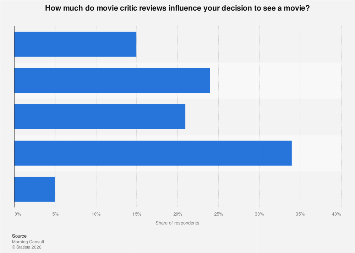
In the digital age, the relationship between film criticism and audience perception has become more intricate than ever. A single review published hours after a premiere can ripple across social platforms, shaping how millions of viewers approach a film before they ever purchase a ticket. Understanding this dynamic is essential for studios, marketers, and media professionals who operate at the intersection of technology and entertainment. This article examines the mechanisms through which film reviews shape audience expectations, the psychological principles at play, and the technological forces amplifying these effects.
The Psychology of Pre-Viewing Expectations
Audiences rarely enter a theater as blank slates. Long before the opening credits roll, viewers have absorbed trailers, social media chatter, and—critically—professional reviews. Psychologists refer to this phenomenon as expectation formation, a process in which prior information creates a perceptual framework that colors subsequent experience.
When a review praises a film’s cinematography or warns of a sluggish second act, it primes the viewer to notice those specific qualities. This priming effect can be powerful enough to alter a viewer’s actual enjoyment. A film anticipated as a masterpiece may feel underwhelming if it merely delivers competence, while a film framed as a guilty pleasure may exceed expectations and generate outsized enthusiasm.
Confirmation Bias and the Review Echo Chamber
Confirmation bias intensifies this effect. Viewers who read a glowing review before watching a film tend to interpret ambiguous scenes favorably, reinforcing the critic’s assessment. Conversely, negative reviews can predispose audiences to perceive flaws even where none were intended. The result is a feedback loop in which critical consensus partially constructs the audience’s reality.
The Role of Aggregator Platforms
The rise of review aggregation platforms has fundamentally restructured how expectations are formed. Rather than reading individual critiques, audiences increasingly rely on composite scores that distill dozens or hundreds of reviews into a single number. This simplification carries significant consequences.
- Score anchoring: A prominently displayed percentage anchors audience judgment before viewing begins.
- Binary perception: Nuanced criticism collapses into “fresh” or “rotten,” flattening complex artistic works.
- Social proof: High scores signal that watching is a safe social choice, influencing group viewing decisions.
- Pre-release momentum: Early aggregate scores can generate hype or backlash cycles that shape box office performance.
For technology platforms, these aggregators represent a case study in how algorithmic curation of user-facing data influences human behavior at scale.
Audience Scores Versus Critic Scores
Many platforms now display dual metrics: one from professional critics and one from verified audiences. This dichotomy has created a new layer of expectation-setting. When the two diverge sharply, audiences often interpret the gap as evidence of elitism or manipulation, which itself becomes a narrative that shapes viewing decisions.
| Critic aggregate score | Perceived artistic credibility | Curiosity or skepticism |
| Audience aggregate score | Perceived entertainment value | Validation or rejection |
| Individual influencer review | Personal trust and parasocial connection | Direct behavioral influence |
| Social media sentiment | Real-time cultural conversation | Fear of missing out or avoidance |
Spoiler Culture and Narrative Anticipation
Reviews do more than evaluate quality; they also control information. The modern spoiler-warning convention reflects an implicit agreement between critics and audiences about how much narrative detail should precede the viewing experience. When critics disclose plot points, they satisfy curiosity but diminish surprise. When they withhold information entirely, audiences may feel that expectations have been set without sufficient evidence.
This tension is particularly acute for genre films with devoted fanbases. A review that hints at a twist without revealing it can generate more anticipation than either full disclosure or complete silence. Skilled critics understand that strategic ambiguity is itself a tool for shaping expectations.
Marketing and Critical Reception: A Feedback Loop
Studios have learned to integrate review reception into their marketing strategies in near real time. When early reviews are favorable, quotes are extracted and splashed across advertising within hours. When reviews are hostile, campaigns pivot toward audience-focused messaging that downplays critical opinion. This responsiveness demonstrates that reviews are no longer passive commentary—they are active inputs in the promotional ecosystem.
The Double-Edged Sword of Hype
Reviews that generate exceptional hype carry an inherent risk. Elevated expectations raise the threshold for satisfaction, meaning a genuinely good film may still disappoint audiences who anticipated greatness. Industry analysts frequently observe that the most damaging reviews are not negative ones but excessively positive ones that create an impossible benchmark.
Conclusion: Managing Expectations in a Review-Saturated Landscape
Film reviews exert a measurable influence on audience expectations through psychological priming, confirmation bias, algorithmic aggregation, and spoiler dynamics. For professionals in media and technology, the lesson is clear: critical reception is not merely coverage but a structural force that shapes perception, attendance, and cultural memory. Understanding these mechanisms enables stakeholders to communicate more honestly with audiences and to design platforms that present criticism with the nuance it deserves.
The most effective approach combines transparency about critical consensus with respect for individual judgment, ensuring that audiences encounter reviews as tools for discovery rather than verdicts delivered in advance.
Leave a Reply